
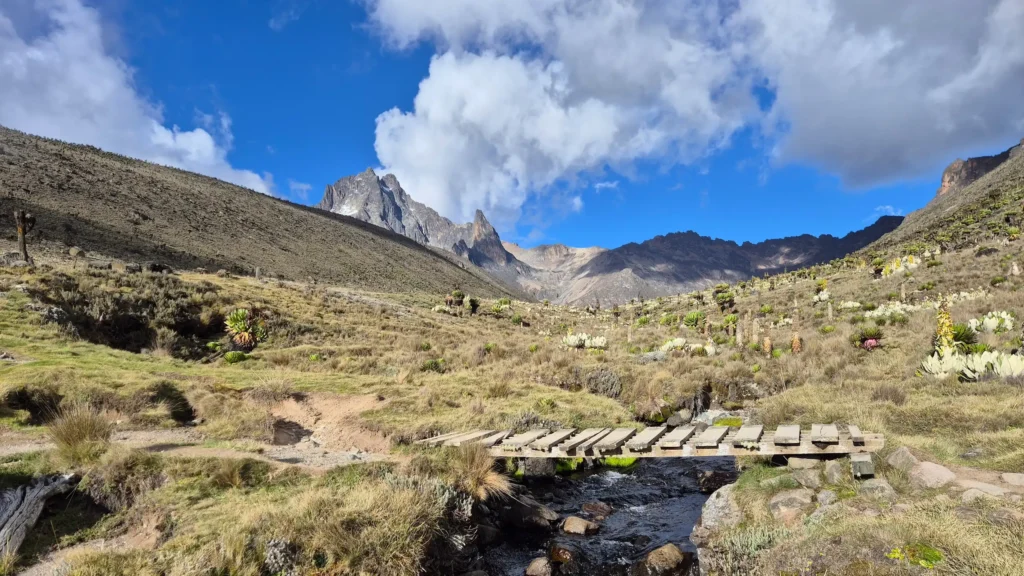
Mount Kenya
Africa’s second-highest mountain and a hiker’s paradise
Mount Kenya is an unusually diverse mountain. As you ascend, the landscape changes rapidly: dense montane forest gives way to bamboo, then to wide‑open moorland, alpine desert, scree slopes, boulder fields, and the jagged volcanic spires of the central peaks. Between the ridges lie vast glacial valleys – long, open corridors of moorland, tarns, and rugged rock – which give the mountain its wide sense of space.
Even at high altitudes, Mount Kenya remains green and full of unique vegetation. It is home to towering groundsel and giant lobelia – prehistoric-looking plants found in very few places on Earth. The mountain is also rich in water, with streams, waterfalls, and more than 25 alpine lakes. It is wilder, steeper, more varied, and less crowded than its taller southern neighbour, Kilimanjaro.
Beyond the summit routes, Mount Kenya has hundreds of kilometres of trails to explore. Below are some of the hikes I’ve completed.
Mount Kenya Hikes
-
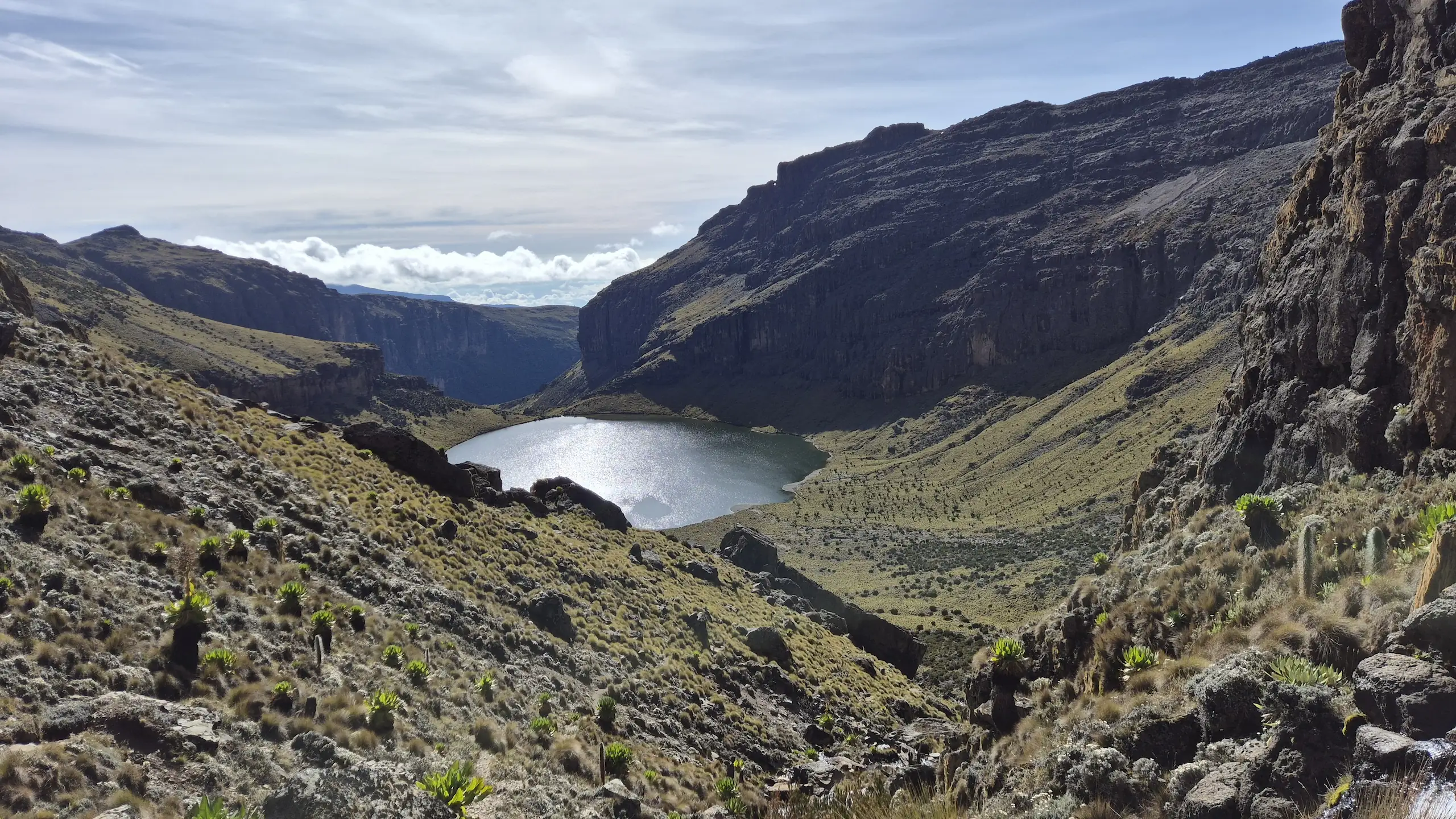
Mount Kenya Traverse – Three Valleys
A four-day, self-supported trek through Mount Kenya’s three major valleys, summiting Point Lenana along the way
-
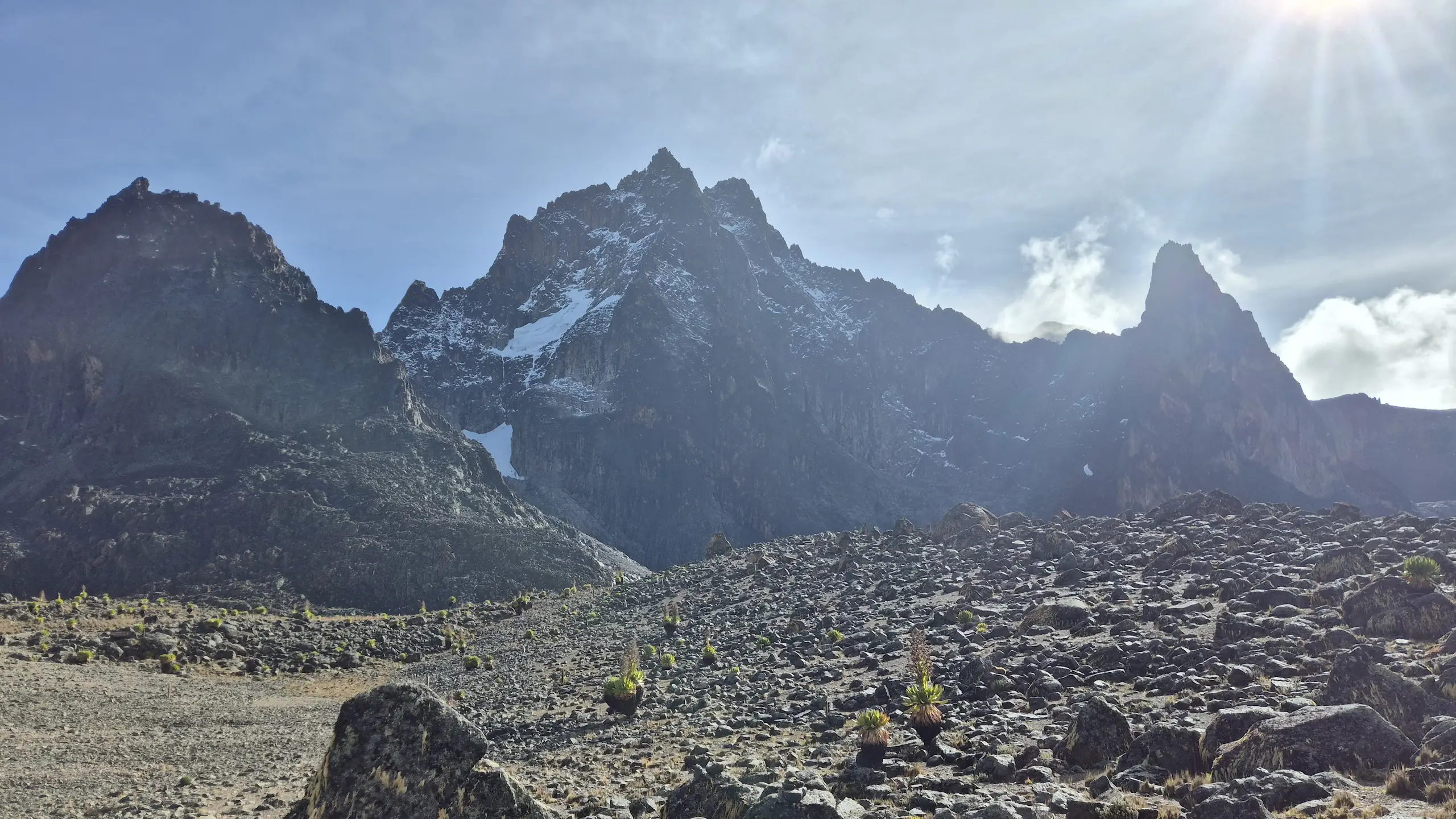
Mount Kenya Traverse – Four Base Camps
A four-day, self-supported trek circling Mount Kenya’s central peaks and passing through four summit base camps
-
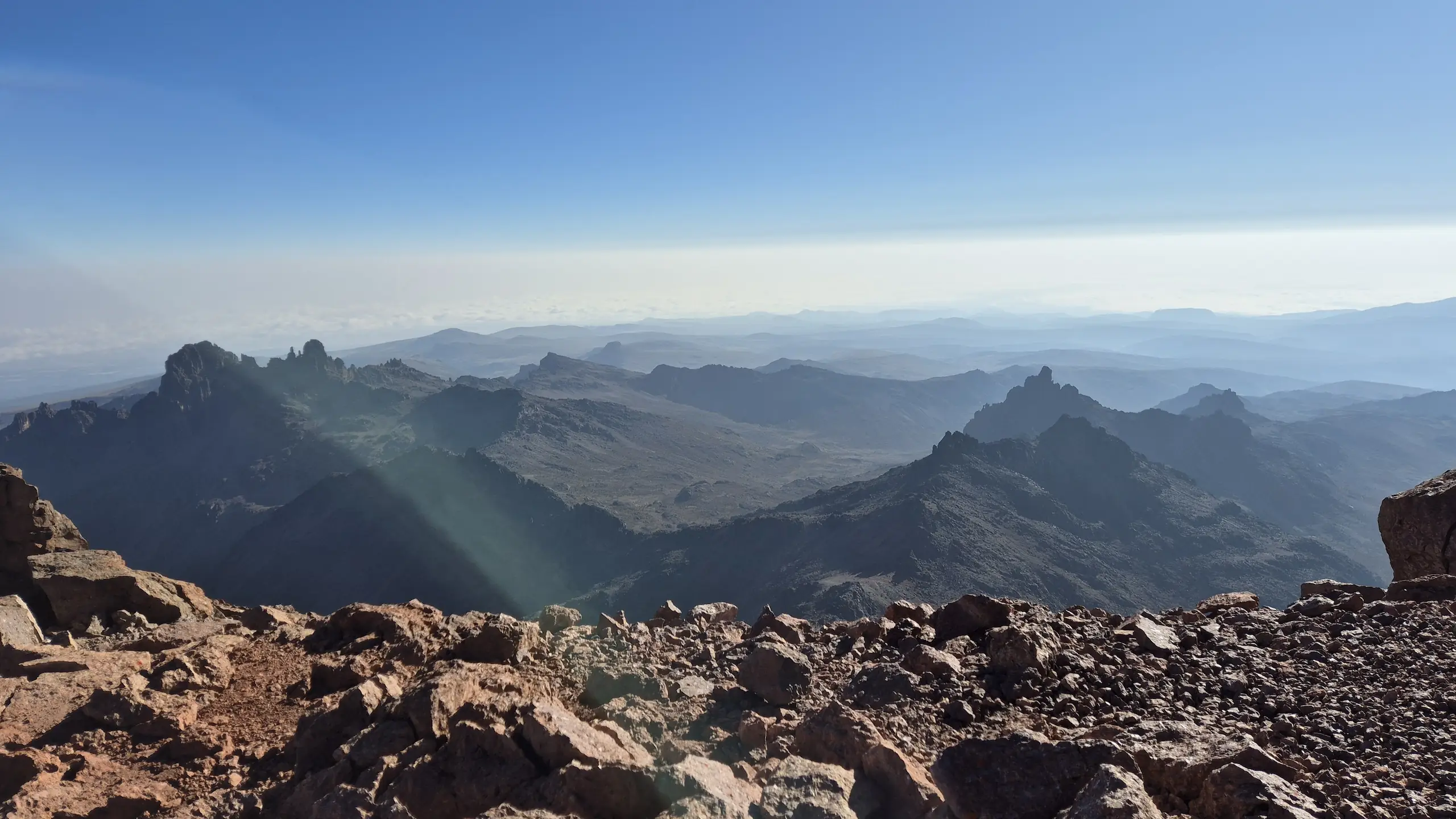
Mount Kenya Summit – Chogoria
A birthday summit to Point Lenana, trekking through one of Africa’s most varied high-altitude terrain